Introduction
If you’ve ever stared at your bank statement and wondered what the delivery vs cooking cost really looks like, you’re not alone. Between service fees, delivery fees, taxes, and tip, the true price of takeout can creep far past the menu total – while a home-cooked dinner often lands in the $3–$5 per-person range.
In this U.S.-focused guide, we break down the delivery vs cooking cost with easy formulas, real-world examples (solo, couples, families), and benchmarks from national data so you can plug in your own numbers. We’ll also compare meal kits, show when delivery can almost win (promos, pickup, group orders), and give practical ways to cut the bill without giving up convenience.
By the end, you’ll know your personal delivery vs cooking cost and how to make smarter, cheaper choices – without complicated math.
TL;DR
- Delivery apps usually add ~25–45% in service/taxes/tip plus a flat delivery fee – exact amounts vary by order size, distance, and city rules.
- A typical home-cooked dinner for an adult comes out near $3–$5 per serving when you benchmark against USDA’s “Food at Home” plans.
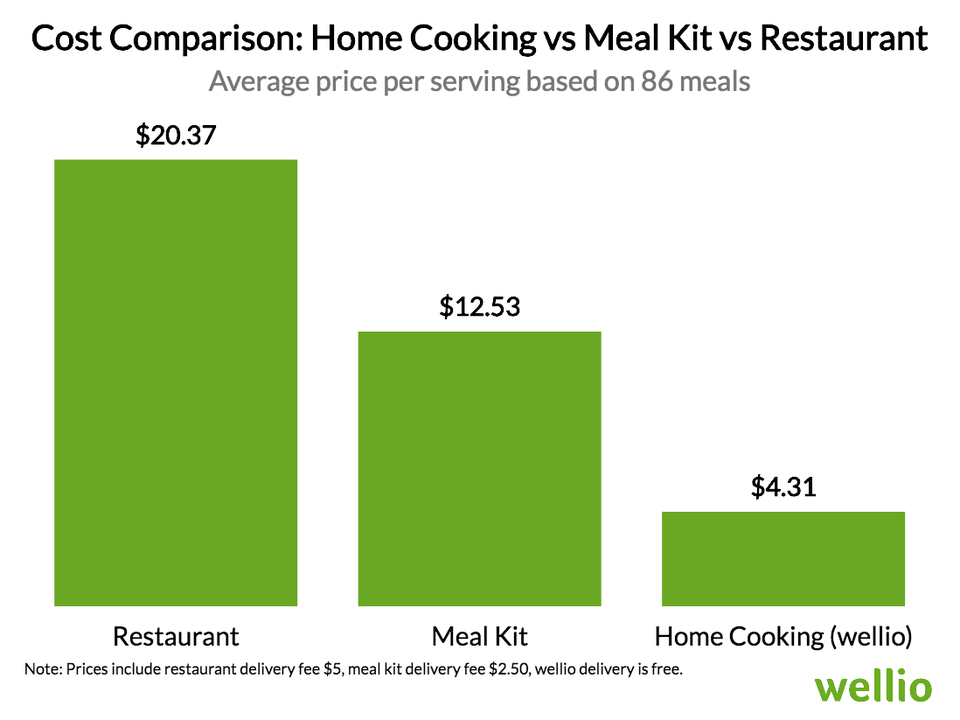
- Meal kits are convenient but generally $8–$13 per serving + shipping at full price (often less with promos).
What’s inside a delivery price (and why it swings)
Delivery platforms list a delivery fee (often variable) and tack on a service fee (usually a percentage of your basket). Small-order fees and taxes may apply; tip is optional but customary. The platforms confirm these fees vary by location, order size, and other factors, and they display them at checkout.
Quick rule of thumb:
Total delivery ≈ (Menu price × 1.25–1.45) + delivery fee, before any promo.
City rules can tweak economics. For example, New York City enacted fee caps on delivery companies (litigated and later settled/adjusted), which affected how platforms structure fees.
What a home-cooked meal really costs (using USDA)
USDA’s official “Food Plans” estimate weekly and monthly costs for food prepared at home by age/sex. For a typical adult (19-50):
- Moderate-cost plan: $73.30/week → about $10.47/day → roughly $3.49/meal if you split the day into 3 meals.
- Low-cost plan: $60.20–$69.40/week depending on sex → about $2.85–$3.30/meal using the same math.
These plans assume meals are prepared at home and include a nutritious mix of foods.
Big picture: Americans spent $6,053 on food at home and $3,933 on food away from home on average in 2023 (BLS). That’s a useful yardstick for how “home vs. away” stacks up nationally.
Delivery vs cooking cost examples: solo, couple, family
A) Solo order
- Menu item: $12.00
- Service+tax (est.): ~20% → $2.40
- Delivery fee: $3.00
- Tip: $2.00
- Delivery total ≈ $19.40
- Home-cooked dinner ≈ $3–$4 → Savings ≈ $15+/meal (before promos).
B) Couple (2 people)
- Two entrées: $24.00; same percentages/fees → ≈ $34–35 delivered
- Home-cooked for two: ≈ $7–$10 → Savings ≈ $24–28/meal.
C) Family (4 people)
- Four entrées: $48.00; fees scale with basket + one delivery fee → ≈ $66
- Home-cooked for four: ≈ $14–$18 → Savings ≈ $48–52/meal.
Annual impact (1 delivery/week):
Solo: ~$15 × 52 ≈ $780; Couple: ~$26 × 52 ≈ $1,350; Family: ~$50 × 52 ≈ $2,600.
Where meal kits fit (price vs. convenience)
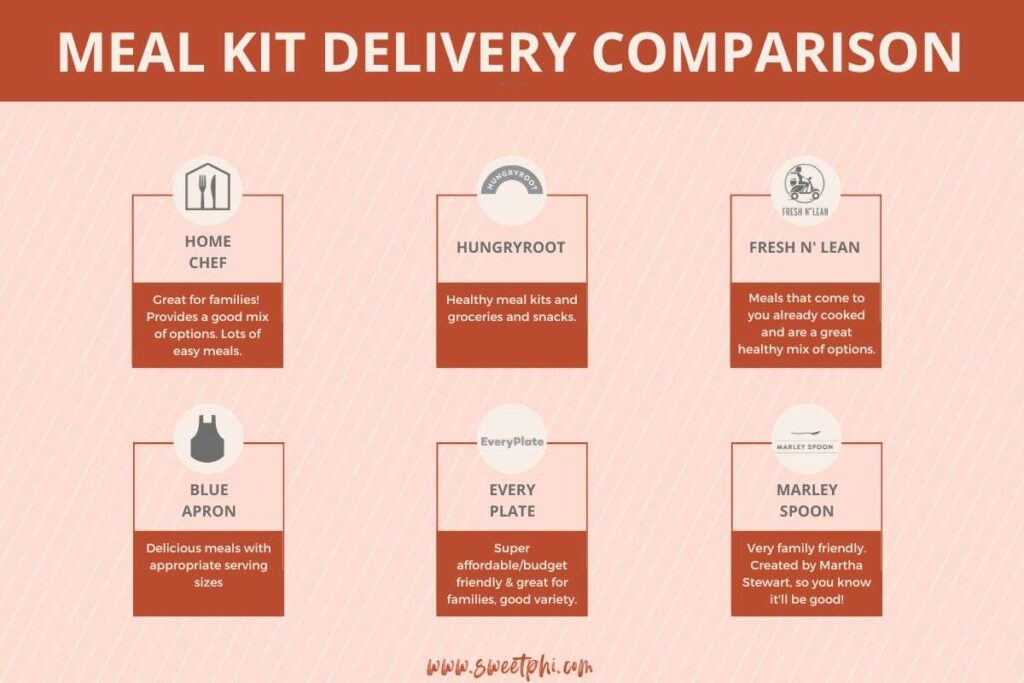
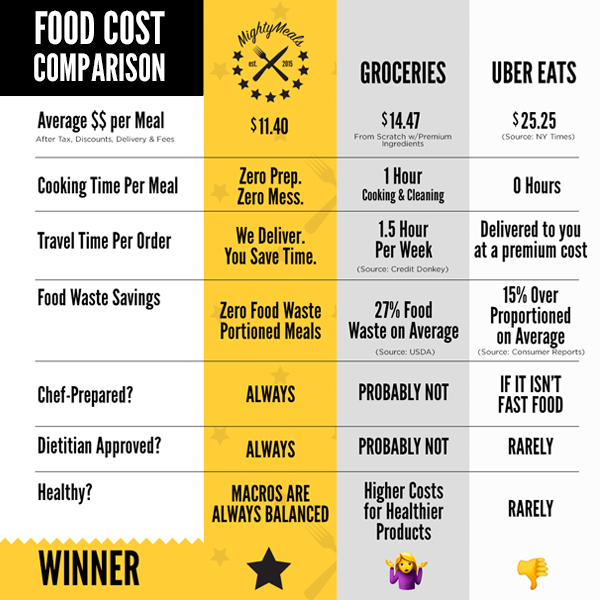
At standard pricing, HelloFresh typically runs about $9.99-$12.49 per serving (lower per-serving cost with more meals; shipping usually ~$10-$11). Blue Apron is broadly similar, with free-shipping options via paid membership. Promotions often slash the first few boxes.
Journalistic reviews and guides put mainstream kits near $8-$13/serving at full price, before shipping – cheaper than many deliveries, more than grocery cooking.
Bottom line:
- Cheapest: cook at home (time-intensive).
- Middle: meal kits (time saved, more expensive than groceries, often cheaper than delivery).
- Most expensive (typically): delivery apps—unless you stack promos or pick up your order.
How promos/pickup shift the delivery vs cooking cost
- Aggressive promos (free delivery, % off)
- Pickup instead of delivery (no delivery fee; service fee may still apply)
- Group orders (one delivery fee spread across several people)
- High value on your time (e.g., $20/hour opportunity cost)
7 ways to cut the bill without quitting delivery
- Use promo codes and gift card portals/cashback.
- Pickup to avoid the delivery fee.
- Skip drinks/desserts (big markups).
- Batch orders (two meals per person → one fee).
- Compare apps—fees can differ on the same restaurant.
- Budget a monthly cap (e.g., 2 deliveries/month).
- Keep staples at home (rice, beans, pasta) to make quick $2–$3 meals.
FAQ – your top delivery vs cooking cost questions
| Scenario | Delivery total* | Home-cooked | Difference / meal |
|---|---|---|---|
| Solo | $19.40 | $3–$4 | $15–$16 more |
| Couple (2) | $34–$35 | $7–$10 | $24–$28 more |
| Family (4) | $66 | $14–$18 | $48–$52 more |
Table: delivery vs cooking cost examples using typical U.S. fees (service, delivery, taxes, tip).
*Totals vary by app, city, order size, promos, and tip. Update figures to match your local rates.
Is delivery cheaper than cooking?
Generally no: once you include service fee, delivery fee, taxes, and tip, delivery often runs ~25–45% above menu price plus a flat fee. Cooking at home aligns with USDA’s food-at-home plans, which imply ~$3–$5 per dinner per person for a typical adult.
How much do Americans spend on eating out vs. at home?
In 2023, the average consumer unit spent $6,053 on food at home and $3,933 on food away from home.
Are meal kits cheaper than delivery?
Often yes – most major kits land around $8–$13 per serving at full price (shipping extra), and promo weeks can be much lower.
Do cities regulate delivery fees?
Some do. New York City imposed caps that later led to a settlement and adjustments; details evolve by city.
References
- USDA Food Plans: official monthly/weekly food-at-home costs by age/sex. Food and Nutrition Service
- BLS Consumer Expenditure Survey 2023: food at home vs. away from home totals. Bureau of Labor Statistics
- Uber Eats fees (customer help): what fees may apply. Uber
- DoorDash fees (customer help): what fees you pay. DoorDash Help
- HelloFresh typical pricing (U.S. media guides): NerdWallet; EatingWell review; WIRED. NerdWallet+2EatingWell+2
- NYC fee cap settlement coverage (context): Reuters.
Further reading on EmpireStats
- Cost of Coffee Over a Lifetime – small daily costs → big yearly totals.
- McDonald’s Subscription Plan ($9.99) – when a food subscription pays off.
- Shocking Misleading Data – recognize “fee creep” & price framing.