Introduction
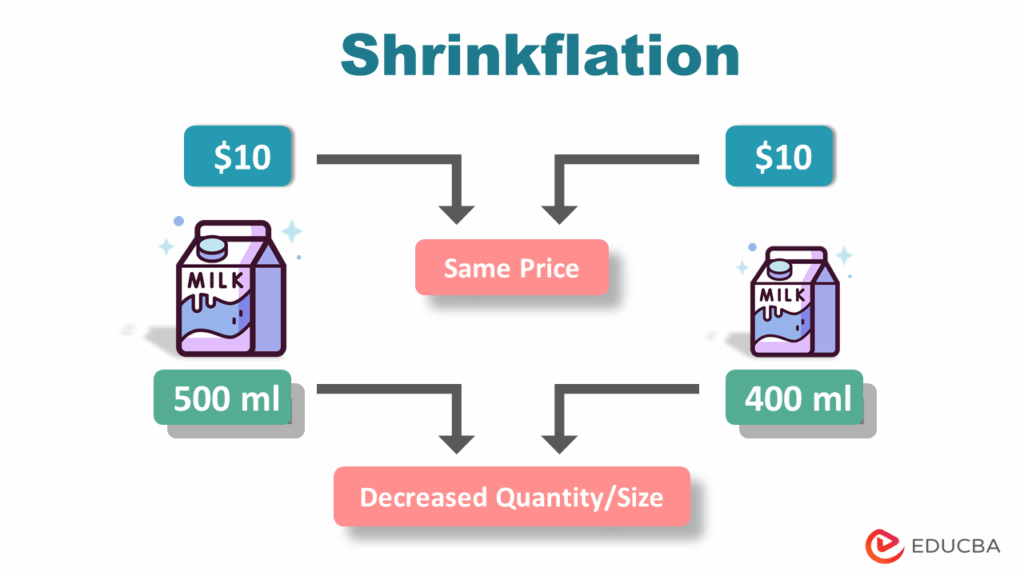
If your groceries seem to disappear faster, you’re probably running into shrinkflation examples at the store – same price, less product. This guide explains shrinkflation in plain English, lists 12 shrinkflation examples you’ll likely see this week, and gives quick checks so you don’t overpay.
What is shrinkflation?
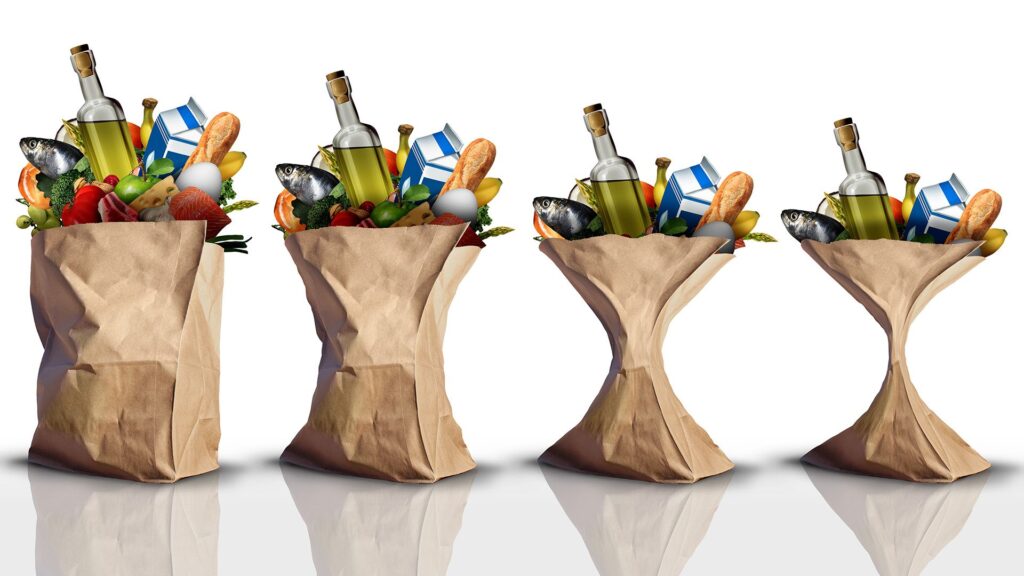
Shrinkflation is package downsizing: brands hold the sticker price but quietly cut ounces, grams, or unit counts. You’ll notice it most in snacks, cereal, coffee, paper goods, pet food, and frozen meals.
How the CPI handles package downsizing (BLS explanation).
Why brands use it (in 30 seconds)
- To avoid sticker shock on the shelf
- To keep prices aligned with promos/psychological thresholds ($2.99, $9.99)
- To pass through ingredient, labor, and logistics costs without obvious price hikes
Official statistics on how often products shrink in size (ONS).
12 shrinkflation examples you can spot quickly
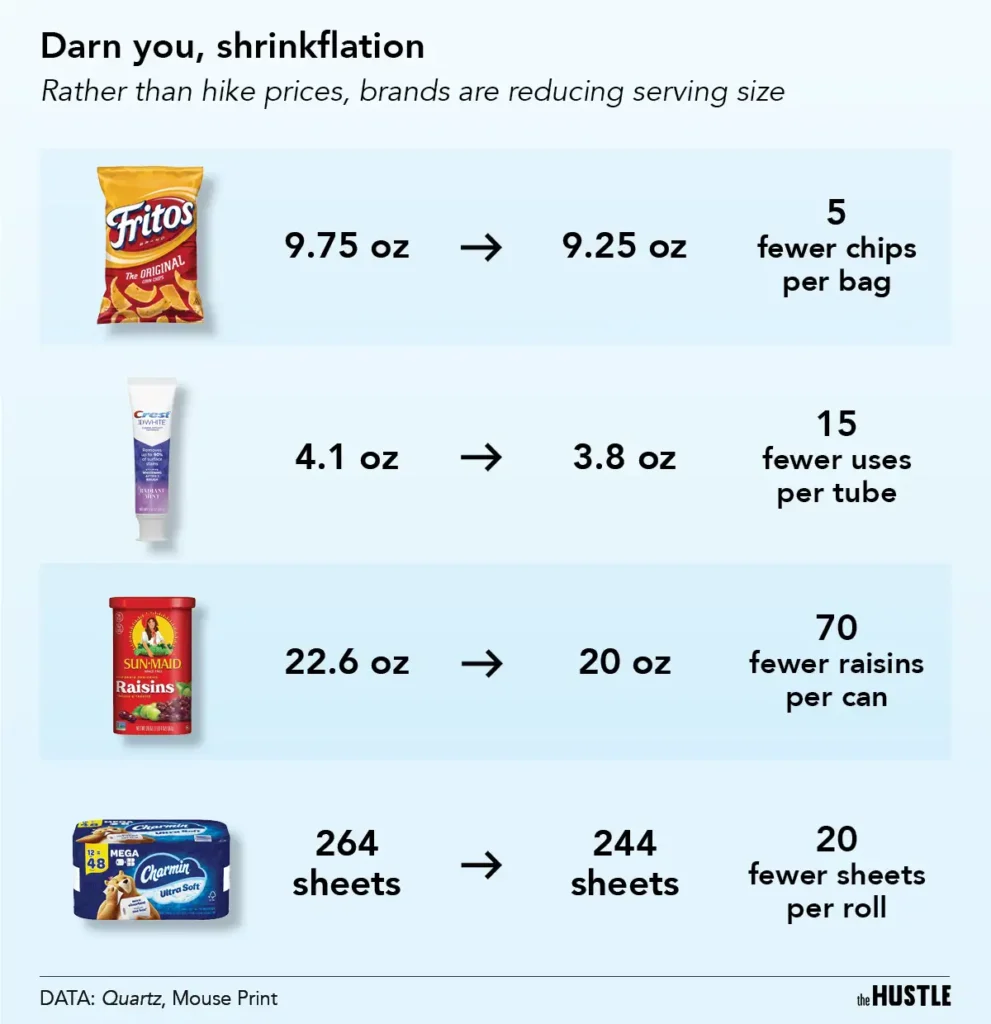
- Chips: Family bag from 12 oz → 10.5 oz; same price point
- Cereal: Box height unchanged, net weight −10-15%
- Yogurt multipacks: 8 cups → 6 cups; per-cup size quietly smaller
- Chocolate bars: Same wrapper, thinner bar or hollow sections
- Coffee beans/ground: Bag goes 12 oz → 10-11 oz
- Peanut butter: Indented bottom reduces volume while jar looks full
- Ice cream: 1.75 qt → 1.5 qt cartons become “new shape”
- Toilet paper: Same roll height, fewer sheets; “mega” names change
- Paper towels: Sheets per roll −10-20%; ply unchanged
- Dish soap: Bottle design adds void space, fluid ounces drop
- Pet food: 16 lb → 14 lb bag at same price; recipe “improvements” touted
- Frozen entrées: Net weight -8-12%, tray looks identical
Recent U.S. review of shrinkflation across common grocery items (GAO).
How to spot shrinkflation examples in 10 seconds
- Read net weight/quantity first, not just price
- Check unit price on the shelf tag (price per oz, per 100g, per count)
- Compare old vs new packages—look for “new look, same great taste”
- Watch for odd sizes (e.g., 13.2 oz instead of the old 14–16 oz)
- Photograph your regulars to track ounce creep over time
Consumer Reports guide to spotting shrinking packages.
Shrinkflation examples at checkout: quick math
Rule of thumb: If size drops 10%, the true price rose ~11% even if the tag didn’t move.
Example: 16 oz coffee at $12 (=$0.75/oz). New 12 oz bag at $12 = $1.00/oz → 33% higher per ounce.
USDA food-at-home price benchmarks you can compare against.
Is it illegal?
Usually not. Regulations require accurate net weight labeling, not size persistence. That’s why unit pricing is your best defense.
Shrinkflation vs inflation (what’s the difference?)
- Inflation: sticker price goes up
- Shrinkflation: sticker price stays, quantity goes down
Both raise your unit cost; shrinkflation is just less visible.
9 ways to beat shrinkflation examples
- Buy by unit price (per oz/100g/count), not by shelf price
- Switch sizes (family size may be cheaper per unit—verify!)
- Store brands often hold size longer; compare
- Bulk when unit price is truly lower (and you’ll use it)
- Frozen produce to avoid waste and ounce creep
- Track “hero items” you buy often; take photos for ounce history
- Meal plan to cut impulse buys of pricey downsized snacks
- Watch coupons/promos—some just mask the new, smaller size
- Call it out: post photos (Reddit, X) → brands sometimes roll back
FAQ (snippet-ready)
What is shrinkflation in simple terms?
Same price, less product. Brands reduce net weight/units instead of raising the sticker price.
Is shrinkflation happening only in groceries?
No – also personal care, paper goods, pet food, and some household items.
How do I calculate the real impact?
Use unit price. If size drops 10% and price is the same, the true cost per unit rises ~11%.
More from EmpireStats
• Shocking Misleading Data – 9 everyday tricks that bend the numbers (and how to spot them).
• Delivery vs Cooking Cost – real U.S. fees vs home-cooked benchmarks with easy math.
• McDonald’s Subscription Plan ($9.99) – when a fast-food subscription actually pays off.